Starting Small. Finishing Big.
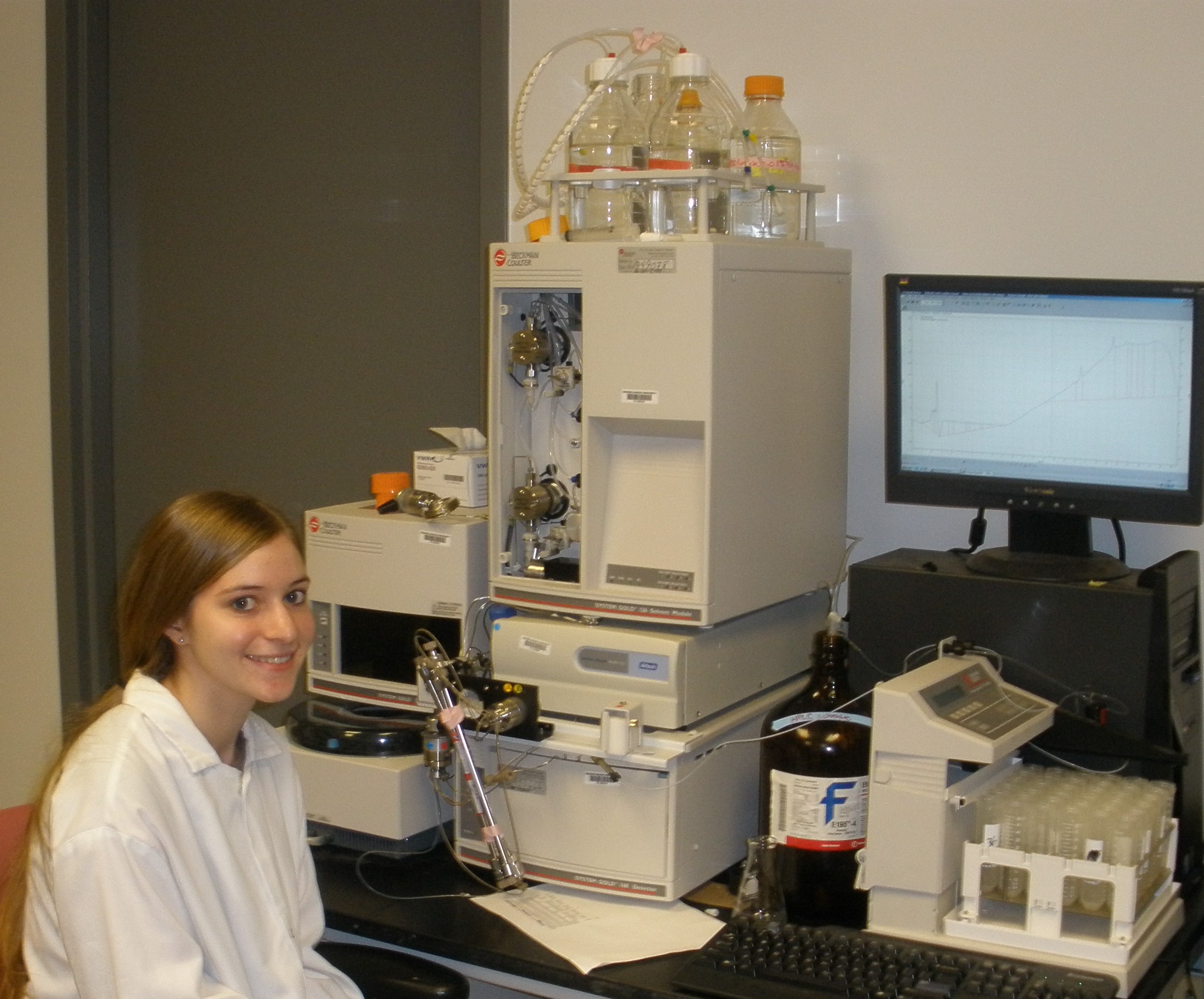
Dr. Allyson Dailey in the lab
Happenstance brought Dr. Robin Couch’s Lab and research into the 4-VA network. Although he was aware of 4-VA@Mason’s Collaborative Research Grants, Couch hadn’t thought much about the program until he received a request from Dr. Mazhar Kanak of VCU. Kanak approached the Couch Lab and the Mason Metabolomics Facility, asking if it was possible to identify biomarkers in blood serum which will determine a patient’s suitability for an islet cell auto transplantation, a procedure applicable to patients that suffer from chronic pancreatitis, requiring the removal of the pancreas. Couch concluded that the 4-VA program could offer an opportunity to answer VCU’s call. Thus, he applied for, and subsequently received, a 4-VA@Mason grant.
Today, with his 4-VA project complete and yielding very promising results, Couch has emerged as an unabashedly enthusiastic cheerleader for the possibilities of collaborative research across the Commonwealth. “Here in Virginia, we’re doing some very cutting-edge research, between UVA, Virginia Tech, JMU, VCU and all the other schools,” says Couch, “the state has really invested a lot of money at these institutions; but we’re all doing something a little bit different. Therefore, it’s imperative that we support collaborations between the institutions to maximize our dollars so we’re not duplicating efforts.”
Couch, an Associate Professor in Mason’s Chemistry and Biochemistry Department reflects on why he believed it was possible to develop a test to meet VCU’s needs. Couch details the comprehensive testing done in the Mason Metabolomics Facility, noting, “Unlike most bloodwork — where you just are looking at a targeted analysis of say a single glucose test – in our lab, we can look at thousands of different features and do a comparison.”
Specifically, Kanak — whose position titles include Assistant Professor; VCU School of Medicine, Department of Surgery, Division of Transplant Surgery; and Director of the Pancreatic Islet Cell Transplant Lab – wanted some insight into predicting which patients would be good candidates for an islet cell auto transplantation.
When the pancreas is removed, so is the body’s ability to produce insulin. Through islet cell transplantation however, the body can generate insulin and avoid surgically induced Type I diabetes. Yet this procedure is only effective in 25-50 percent of patients who have a pancreatotomy. Kanak postured, could a blood test serve as a predictor of successful surgery? Couch thought it was possible.
Challenges Ahead.
Islet cell auto transplantation is conducted during the surgery to remove the pancreas. The patient’s specific pancreatic cells that normally produce insulin (Islet cells) are extracted, cleansed, and returned into the patient. The islets then embed themselves onto the liver and resume their function releasing insulin. Because the islets are the patient’s own, there is no auto rejection.
Kanak carefully collected bloodwork from nine different pancreatotomy patients at various time points — before the patient underwent surgery, at several stages during the surgery, and then after the surgery – and sent them to Couch for analysis.
Then the pandemic hit. The analysis Couch envisioned possible looked possibly impossible. Labs were shut down. Students were sent home. Faculty couldn’t conduct research. The blood samples sat frozen in the lab. For months and months.
Then, when labs began to open back up, there were explicit restrictions on who could be in the lab and how many people could be in the lab. Several students originally designated to work on the project moved on to other life choices with the long break. Fortunately, Couch had a more than suitable fallback plan. He was able to rely on Mason Metabolomics Facility Lab Co-Director Dr. Allyson Dailey, who stepped in to handle the research. “I was able to run all the samples and then assisted with data analysis,” says Dailey.
Sample processing is quicker than data analysis, notes Couch. So, when the lab got back to work following the shutdown, considerable time was spent doing an exhaustive analysis of what features in the bloodwork most correlated with surgical outcomes. Dailey concluded that of the 2,500 features found, there were only six metabolites identified as predictors of outcome. A big breakthrough for the team.
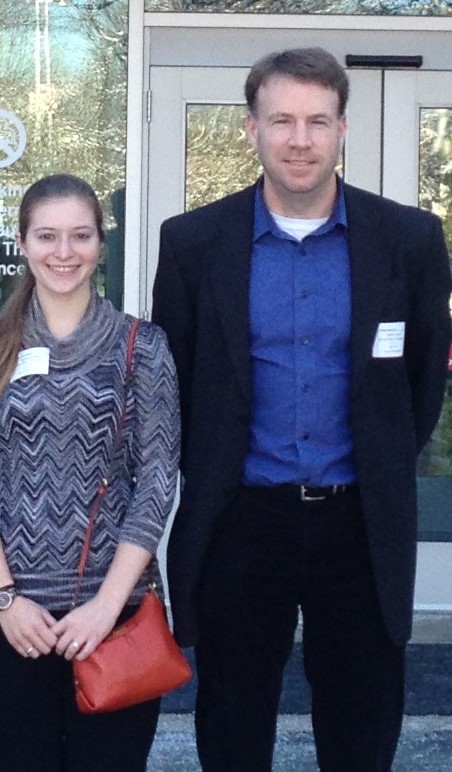
Drs. Allyson Dailey and Robin Couch
“Now we don’t need to look at 2,500 metabolites, we only need to look at six — and we can ignore all of the other ones,” Couch points out. “Going forward, we can focus our study and our attention only on those six and it makes it much easier to process the data. Now, it won’t be so time consuming.”
With the important groundwork done, Couch believes they can take this research to the next level. “This is a great pilot scale investigation,” says Couch. Next stop? Getting a grant application into the National Institutes of Health, to seek funding for a clinical study with hundreds of participants — ensuring the biomarkers are validated.
Importantly, Couch thinks there actually could be much more to the research. He wonders, if it is possible to identify the successful candidates for islet cell auto transplantation; is there a future where this procedure could be valuable for all Type I diabetes patients? “Is it feasible to engineer out the problems and then make it successful for everybody?” Couch asks. “Hopefully,” he answers.
Couch and Dailey reflect on the research and its outcome. Concludes Couch, “None of this would have happened if it wasn’t for the 4-VA funds. We would have never had access to those samples, and we would never have done the research if it wasn’t for this program that fosters that collaborative environment. We’ll get further faster with this type of collaboration. It’s one thing to fund individual islands (schools) with equipment and personnel, but to make a bridge between the islands, it really makes a big difference.”

